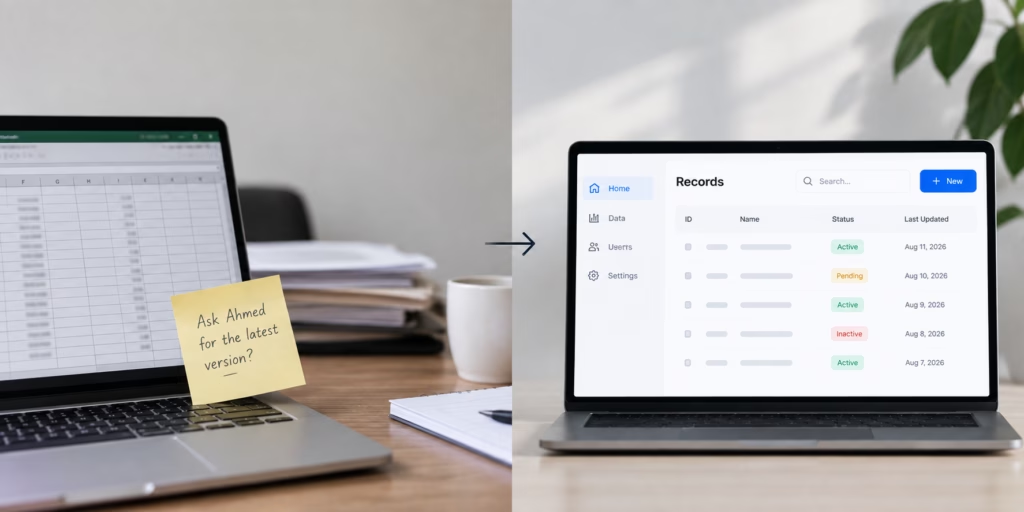
Almost every business has one. The spreadsheet, the old database, the tool someone built years ago that now quietly runs something important. It works, so no one touches it. Then the person who understood it leaves, it hits a limit, or one wrong cell breaks a day of work. What started as a shortcut has become a risk.
The most dangerous system in a business is often the one no one is allowed to touch.
Signs a legacy tool has become a liability
- ✓Only one person really understands how it works.
- ✓It breaks in ways no one can predict.
- ✓It cannot handle the volume you run through it now.
- ✓There is no record of who changed what, or when.
- ✓You are afraid to change it, so it never improves.
Replacing it without losing what works
The goal is not to throw it out and start from scratch. It is to move the data and the process it holds into something modern and maintainable, without a stressful all-at-once switch.
1
Map what it actually does, not what the documentation claims.
2
Move the data across in full, checked against the original.
3
Rebuild the process it runs, keeping the parts that work.
4
Run the old and new side by side until the new one is trusted.
5
Switch over, with the old tool kept as a fallback.
The aim is a system you are allowed to change, not one you are afraid of.
What you end up with
A system more than one person understands, that keeps a record of what happens, and that can grow with the business instead of holding it back. Tell us what old tool your business quietly depends on, on WhatsApp from any page of the site.