
Why we still run the systems we built eight years ago
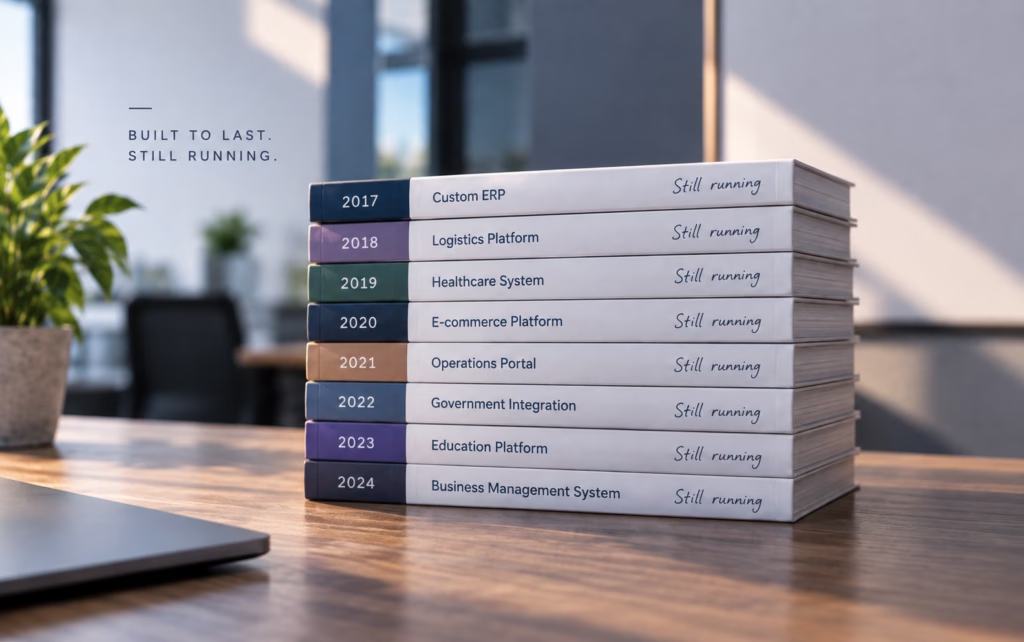
Most software gets delivered and then left. A team builds it, hands over a login and a folder of documents, and moves on. Six months later the people who understood the system are gone, and the business is on its own.
We work the other way. We build the systems our clients run on, and then we stay and run them. Today we run 100 live systems for 50 organisations. Some have been in daily production for eight years, and every one is still looked after by the people who built it.
The problem with the hand-off
When software is handed off, the knowledge walks out with the people who wrote it. The next team inherits code they didn’t design and decisions they weren’t around for, so they patch the system instead of running it. Small problems sit unfixed, and the whole thing ages faster than the business it serves.
You can live with that on a marketing site. When the same thing happens to the system your operations, orders and finances run through, it becomes a risk you carry every day.
| Deliver and hand off | Build and run | |
|---|---|---|
| Who maintains it | A different team inherits it | The same team that built it |
| Where knowledge goes | It leaves at handover | It stays with the builders |
| How problems get fixed | Patched around | Fixed at the source |
| What you depend on | A folder of documents | The people who built it |
What build and run actually means
Build and run means one team owns a system on launch day and still owns it three years later. The people who designed and shipped it are the same ones hosting it and keeping it working as the business changes around it.
We build it differently when we know we’ll be the ones running it for years. It has to stay understandable enough for someone new to pick up later, and free of the shortcuts that turn into next year’s outage. Where we can, we reuse foundations we already maintain instead of starting from scratch, and nothing ships to production untested.
One team, a hundred systems
One team can run 100 systems only because they were built to be maintained from the start. Shared foundations, repeatable deployment and a habit of testing before anything goes live let a small team keep that many healthy without any being quietly neglected.
Those hundred systems are spread across fifty organisations. Most of those clients have given us more than one system to run, and they have stayed.
Why continuity beats speed
Most software teams can move fast. The harder thing is to still be responsible for what you built years after it shipped.
Speed gets you a launch. Continuity gets you a system you can depend on.
What clients are really paying for isn’t the project itself. It’s the confidence that the system running their operations keeps running, and that the people who understand it stay one message away.
The proof is still in production
A few of the systems still in daily use:
- ✓GS1 Egypt: custom ERP and workflow systems running the national barcode authority at scale.
- ✓Hamza Group: mobile apps and a SAP-joined system in daily use across the business.
- ✓Abdel Aziz Stores: an online store running on live SAP stock.
None of these are case studies we finished and shelved. They’re in daily use, maintained by the same team that built them.
Who will still be running it in five years
If a system runs your business, who can build it is only part of the decision. Who will still be running it in five years matters just as much, and it’s the part we focus on most.
If you have a system you need built and kept running, reach us on WhatsApp from any page of the site and tell us what it needs to do.
Keep Reading
Related articles

The software someone builds you vs the software someone runs for you
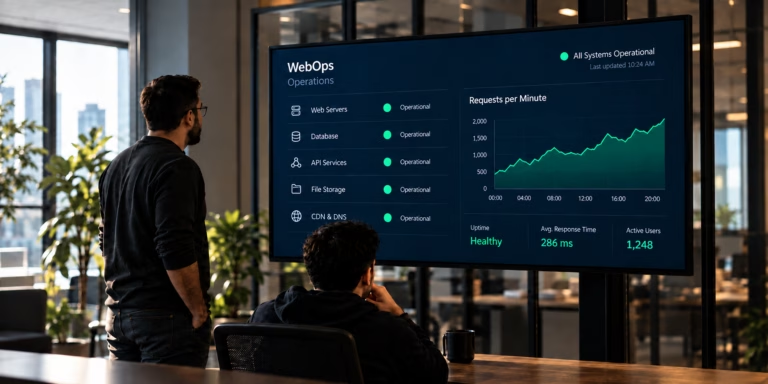
How one team keeps 100 systems running, none neglected
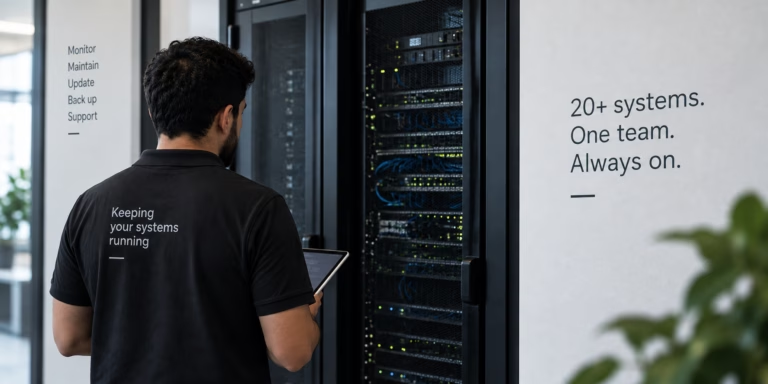
What managed operations means when 20+ systems run on your infrastructure
Like what you read?
Let's build something great together.
From websites to platforms — we design, build, and run digital products across MENA.
See Our Work →