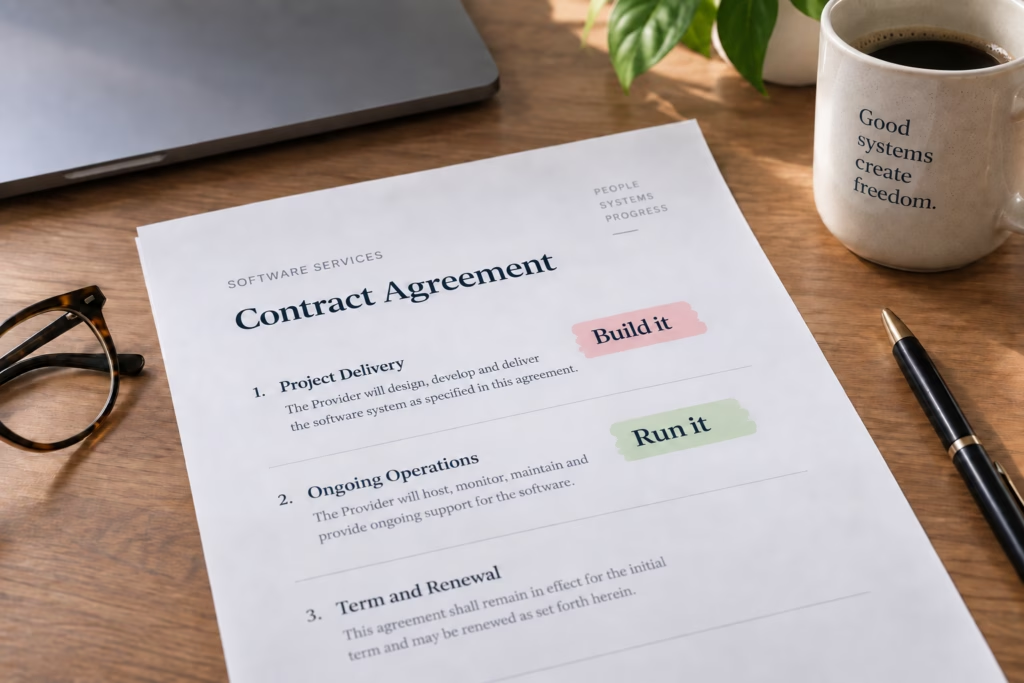
Most software contracts end at delivery. The vendor builds it, hands it over, sends the invoice, and the relationship is done. If the software runs your operations, that’s exactly the wrong place for the contract to stop. Here is what ‘we build it and run it’ should actually mean on paper.
| |
Delivery-only contract |
Build-and-run contract |
| When it ends |
At handover |
Ongoing, with a defined term |
| Who maintains it |
You, once it is delivered |
The team that built it |
| When it breaks |
Out of scope |
A named response time |
| Changes after launch |
A new project each time |
Handled as the business changes |
| Your data and access |
Handed over, then your problem |
Yours, and still supported |
The terms that make the difference
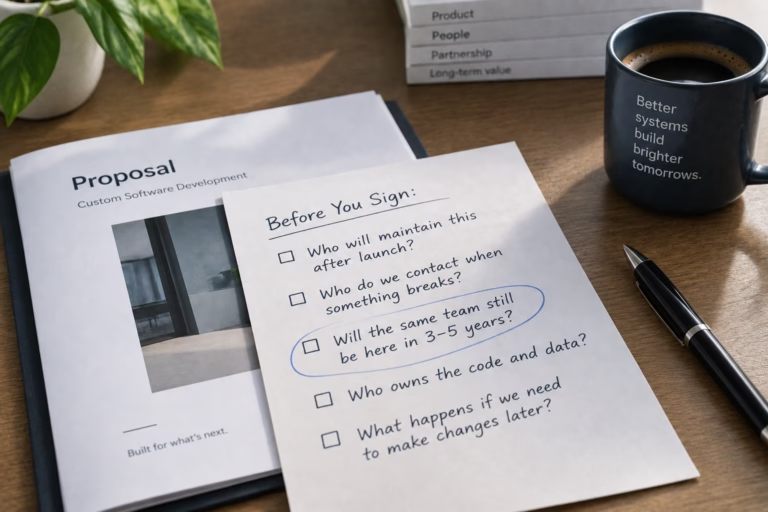
The words matter more than the promises. Before you sign, look for these:
- ✓A named response time for when something breaks.
- ✓Who is responsible for hosting, updates, and security after launch.
- ✓What happens to your data and your access if you ever leave.
- ✓How changes are handled once the system is live.
If the contract ends at delivery, so does the accountability.
Why it matters
A delivered project and a system someone runs can look identical in a proposal. The contract is where the difference becomes real, or disappears. If ongoing responsibility isn’t written down, it doesn’t exist. Tell us what you’re commissioning, on WhatsApp from any page of the site.